


Coated calcium carbonate is treated with a thin layer of stearic acid to disperse better in polymers, and choosing between coated and uncoated grades changes how your product runs. ELT (Egyptian Limestone Tiles) is a leading Egyptian supplier of both coated and uncoated calcium carbonate, exported factory-direct worldwide.
💬 WhatsApp Us✉️ Email Our Experts📞 Call Us
As one of the leading marble suppliers in Egypt, ELT also supplies Egyptian marble, Egyptian granite and Egyptian limestone tiles factory-direct, alongside its industrial calcium carbonate and limestone range.
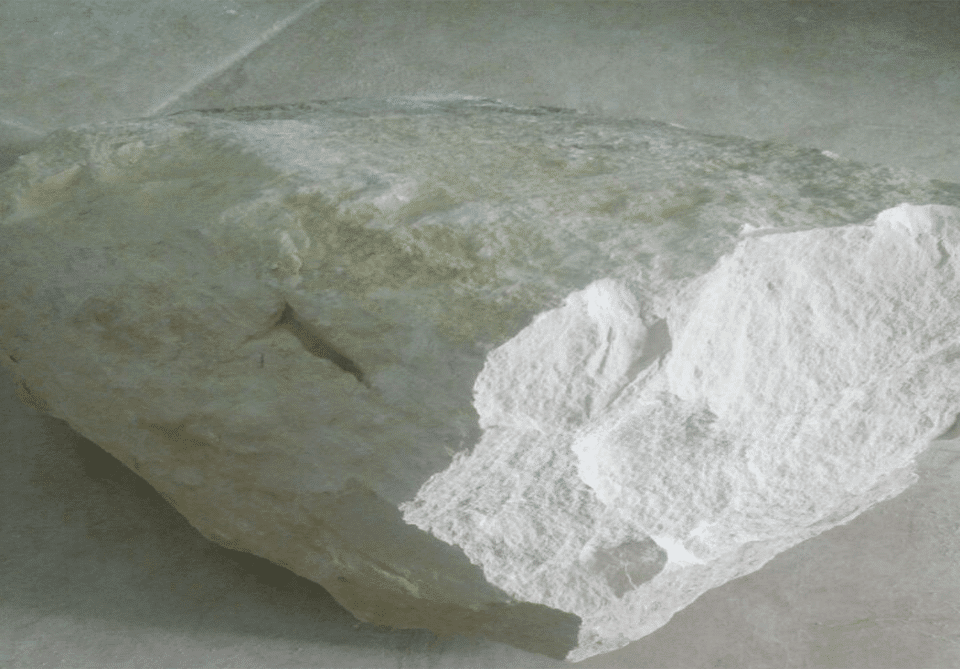
What is coated calcium carbonate?
Coated calcium carbonate is ground calcium carbonate whose particles are surface-treated, usually with stearic acid, to make them hydrophobic. The coating stops the powder absorbing moisture and helps it disperse evenly in oils and polymers. Uncoated calcium carbonate is the same milled mineral without that treatment. Both come from natural limestone (CaCO₃), described on Wikipedia.
Coated calcium carbonate vs uncoated: the difference
The practical difference is dispersion and compatibility. Coated calcium carbonate mixes cleanly into plastics, masterbatch, sealants and solvent systems, preventing agglomeration and improving output and finish. Uncoated grades work best in water-based systems like emulsion paint, putty, adhesives and many construction products, where the coating is unnecessary and can even interfere. Matching the grade to the carrier is what gets the best result.
When to choose coated
Choose coated calcium carbonate for polyolefin and PVC compounding, filler masterbatch, cables, sealants, hot-melt adhesives and any oil- or polymer-based system. The stearic treatment improves wetting, raises the filler loading you can reach, and protects line speed and surface quality. ELT supplies coated grades across fine micron sizes for film, pipe, profile and moulding.
When uncoated works best
Uncoated calcium carbonate is the right pick for water-based paints, fillers and putties, ceramics, glass, agriculture and most construction uses, where it brightens and extends at lowest cost. ELT mills uncoated Egyptian calcium carbonate and limestone flux to defined purity and fineness for these applications.
Grades and quality from ELT
As a quarry-to-mill producer, ELT controls brightness, purity, particle size and coating level batch to batch and ships a certificate of analysis with each order. Buyers can run trials on both coated and uncoated samples and standardise on the grade that performs best, with confidence that future shipments will match.
Pricing, MOQ and export from Egypt
Bought factory-direct, Egyptian coated and uncoated calcium carbonate is highly competitive for bulk and full-container volumes, with pricing set by coating, fineness and grade. Minimum orders typically start at one container. Request samples of both and ELT will recommend the right grade and confirm freight to your port.
How the stearic coating is measured
Coating quality is described by coating level (the percentage of stearic acid on the surface) and by tests for how completely the particles are treated. Too little coating leaves the powder partly water-loving and prone to clumping; too much wastes additive and can bloom to the surface. ELT controls coating level along with particle size and purity, so compounders get consistent dispersion from batch to batch rather than chasing a moving target on their line.
Contact ELT (Egyptian Limestone Tiles)
ELT is a leading Egyptian calcium carbonate and limestone supplier, exporting factory-direct across the Middle East and worldwide. Need a quote, a datasheet, or a sample? Our export team replies within 24 hours.
💬 WhatsApp Us✉️ Email Our Experts📞 Call Us
- Mobile / WhatsApp: +20 100 926 7545
- Office: +20 2 2690 1767
- Email: [email protected]
- Head Office: 7 El Edrisi St., next to Heliopolis Sporting Club, Office 402, Cairo, Egypt
- Website: egyptianlimestonetiles.com
Frequently asked questions
What is the difference between coated and uncoated calcium carbonate?
Coated calcium carbonate is treated with stearic acid so it is hydrophobic and disperses well in polymers and oils, making it ideal for plastics, masterbatch and sealants. Uncoated calcium carbonate is untreated and best for water-based systems like paint, putty and construction.
When should I use coated calcium carbonate?
Use coated calcium carbonate in plastics, PVC, filler masterbatch, cables, sealants and adhesives, where the stearic coating improves dispersion, raises filler loading and protects line speed and finish. ELT supplies coated grades in fine micron sizes for these applications.