

Understanding how limestone is quarried and processed explains why a quarry-to-factory supplier delivers more consistent stone. ELT (Egyptian Limestone Tiles) controls the whole journey from Egypt’s limestone quarries to finished tiles, worldwide.
💬 WhatsApp Us✉️ Email Our Experts📞 Call Us
As one of the leading marble and granite companies in Egypt, ELT supplies Egyptian marble, Egyptian granite and Egyptian limestone tiles factory-direct, alongside its industrial calcium carbonate and limestone range.
How limestone is quarried, step by step
Knowing how limestone is quarried starts at the deposit. Geologists identify a quality bed, then large blocks are separated from the rock face using diamond wire saws, chain cutters and controlled splitting rather than heavy blasting, which would crack the stone. The freed blocks — often several tonnes each — are lifted out, inspected and graded for colour and soundness before transport to the processing factory. Careful extraction protects the stone and yields the large, sound blocks needed for tiles and slabs.
From block to slab
At the factory, blocks are sawn into slabs on large gang saws or block cutters. The slabs are then resin-treated or reinforced if needed, and inspected again. This is where consistency is won or lost: matching slabs by colour and vein at this stage is what lets a producer supply uniform colour batches for big projects. ELT controls this in-house as a quarry-to-factory producer.
Cutting and calibrating tiles
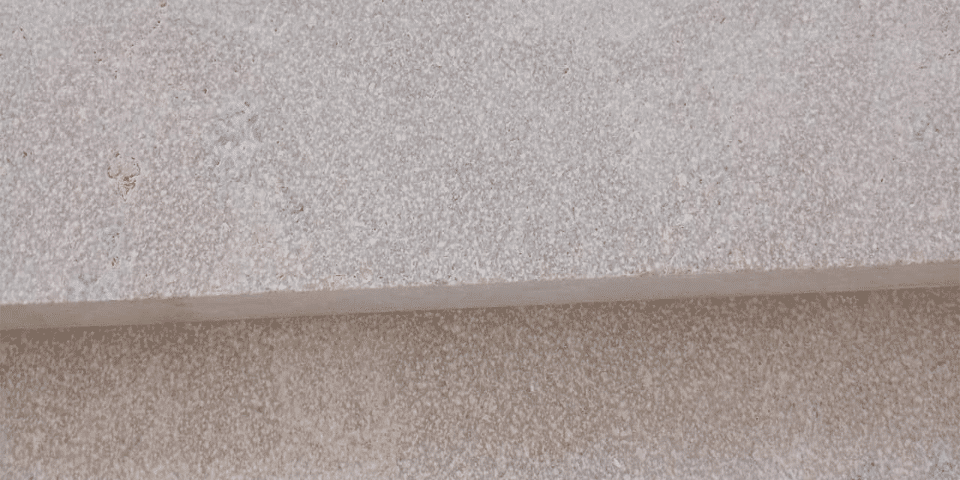
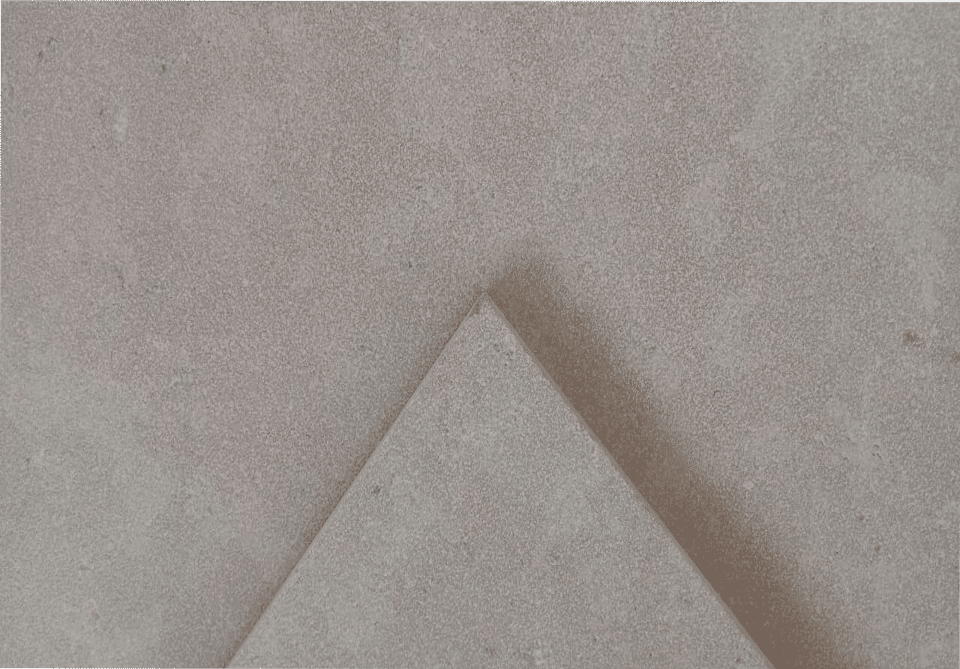
Slabs are cut into tiles and pavers to the required sizes, then calibrated so every piece is the same thickness — essential for flat, lippage-free laying. Edges are squared or profiled (bullnose, chamfer) as specified. Precise calibration and squaring at this stage are what make installation fast and clean on site.
Finishing the surface
Finally the surface is finished: honed and polished by abrasive heads, or textured by tumbling, sandblasting, brushing or flaming for grip and character. The same Egyptian limestone can be supplied in several finishes from one quarry, letting designers mix smooth and textured surfaces across a project.
Why quarry-to-factory matters
When one producer controls quarrying, slabbing, cutting and finishing, quality and colour stay consistent and there are no surprises from mixed sources. ELT’s quarry-to-factory control is why importers and contractors get matched colour batches, tight calibration and dependable supply rather than variable material bought through traders.
Source quarry-direct limestone from ELT
As a quarry-to-factory producer, ELT supplies Egyptian limestone straight from its own quarries and factory as calibrated, colour-matched tiles, slabs and pavers. We export worldwide from Cairo with full documentation and free samples, so you get authentic, consistent stone at factory-direct prices.
Responsible stone extraction
Modern limestone quarrying is far more controlled than the blasting of the past. Diamond-wire and chain cutting free blocks precisely, reducing waste rock, and offcuts are processed into smaller products, aggregate or calcium carbonate rather than discarded. As a natural material that lasts for generations, limestone also avoids the repeated replacement of manufactured surfaces. ELT’s quarry-to-factory model keeps the whole process efficient, getting maximum usable stone from each block and minimising waste across extraction, cutting and finishing.
Contact ELT (Egyptian Limestone Tiles)
ELT is a leading Egyptian supplier of natural stone and industrial minerals — marble, granite and limestone tiles plus calcium carbonate — exporting factory-direct across the Middle East and worldwide. Need a quote, a datasheet, or a sample? Our export team replies within 24 hours.
💬 WhatsApp Us✉️ Email Our Experts📞 Call Us
- Mobile / WhatsApp: +20 100 926 7545
- Office: +20 2 2690 1767
- Email: [email protected]
- Head Office: 7 El Edrisi St., next to Heliopolis Sporting Club, Office 402, Cairo, Egypt
- Website: egyptianlimestonetiles.com
Frequently asked questions
How is limestone quarried?
Limestone is quarried by separating large blocks from the rock face using diamond wire saws, chain cutters and controlled splitting rather than heavy blasting, which would crack the stone. The blocks are lifted out, graded for colour and soundness, then transported to a factory to be sawn into slabs and cut into tiles.
Why does buying quarry-to-factory limestone matter?
When one producer controls quarrying, slabbing, cutting and finishing, colour and quality stay consistent and there are no surprises from mixed sources. ELT’s quarry-to-factory control gives importers matched colour batches, tight calibration and dependable supply at factory-direct prices.