

Limestone vs porcelain is the classic natural-versus-manufactured flooring decision, and each has real strengths. ELT (Egyptian Limestone Tiles) supplies authentic Egyptian limestone and this guide compares it fairly with porcelain so you can choose with confidence.
💬 WhatsApp Us✉️ Email Our Experts📞 Call Us
As one of the leading marble and granite factory in Egypt, ELT supplies Egyptian marble, Egyptian granite and Egyptian limestone tiles factory-direct, alongside its industrial calcium carbonate and limestone range.
Limestone vs porcelain: natural vs manufactured
The fundamental difference is origin. Limestone is a natural stone, quarried and cut, so every tile is unique with genuine depth, texture and subtle colour variation. Porcelain is a manufactured ceramic, fired from clay and often printed to imitate stone, so tiles are uniform and can be near-identical. That contrast — authentic character versus engineered consistency — drives the whole comparison and usually comes down to what you value more.
Look and feel
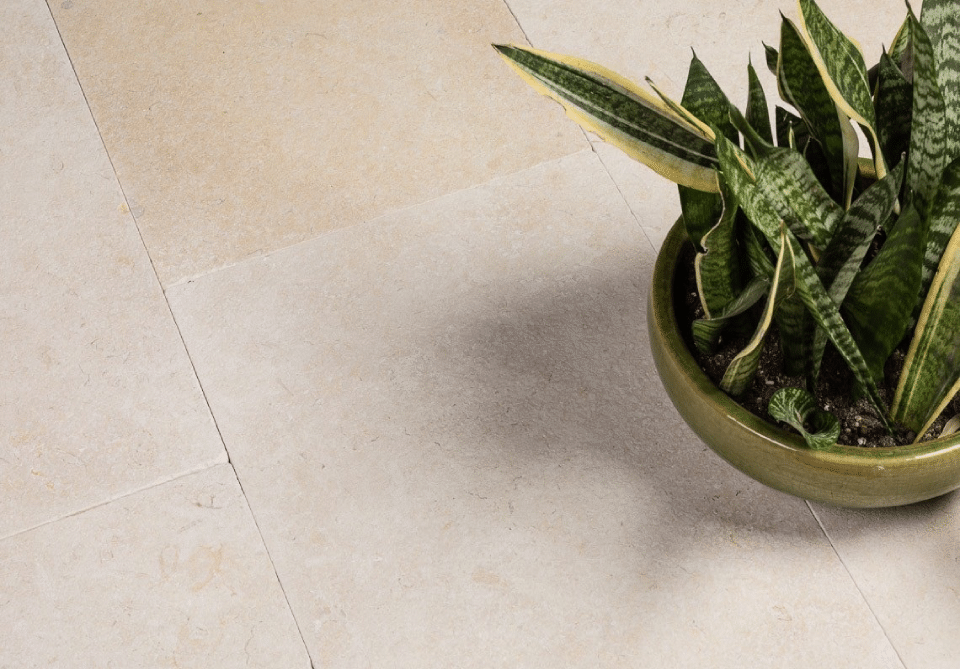
Natural limestone has a warmth, depth and tactile quality that printed porcelain struggles to fully match; up close, stone reads as real while porcelain can look repetitive across a floor. Limestone also feels and sounds like stone underfoot. Porcelain offers perfect pattern repetition and a huge range of looks, but for genuine, characterful natural beauty, limestone like creamy Galala is in a different class.
Durability and maintenance
This is porcelain’s strong suit: it is extremely hard, near non-porous, stain-resistant and needs no sealing, which suits very high-traffic or low-maintenance settings. Limestone is a softer, porous natural stone that needs sealing and pH-neutral care, and it can etch with acids. In return it can be honed and re-finished over decades, and it ages with character rather than simply wearing.
Cost and value
Entry-level porcelain can be cheaper to buy and install, while natural limestone is a premium material that adds genuine value and a high-end feel to a property. Buying limestone factory-direct from Egypt narrows the gap. For prestige homes and spaces where authenticity matters, the natural stone is the investment that lifts the whole interior.
Which should you choose?
Choose porcelain for maximum durability, zero sealing and a budget-friendly, uniform finish in heavy-use or rental settings. Choose natural limestone for authentic beauty, warmth and long-term value in homes and prestige projects where character counts. Many schemes use porcelain in utility areas and limestone where it will be seen.
Source Egyptian limestone from ELT
As a quarry-to-factory producer, ELT supplies authentic Egyptian limestone tiles and slabs in many colours and finishes, with matched colour batches and free samples. We export worldwide from Cairo with full documentation, so you can compare real stone against porcelain before you decide.
Using limestone and porcelain together
The choice is not always either-or. Many homes use hard-wearing porcelain in utility rooms, laundries and busy entrances, then switch to natural limestone in living spaces, hallways and anywhere the floor is on show. Keeping a consistent colour tone between the two helps the transition feel deliberate. This blended approach gives the low maintenance of porcelain where it counts and the authentic warmth of Egyptian limestone where it will be seen and felt every day.
Contact ELT (Egyptian Limestone Tiles)
ELT is a leading Egyptian supplier of natural stone and industrial minerals — marble, granite and limestone tiles plus calcium carbonate — exporting factory-direct across the Middle East and worldwide. Need a quote, a datasheet, or a sample? Our export team replies within 24 hours.
💬 WhatsApp Us✉️ Email Our Experts📞 Call Us
- Mobile / WhatsApp: +20 100 926 7545
- Office: +20 2 2690 1767
- Email: [email protected]
- Head Office: 7 El Edrisi St., next to Heliopolis Sporting Club, Office 402, Cairo, Egypt
- Website: egyptianlimestonetiles.com
Frequently asked questions
Is limestone or porcelain better for flooring?
It depends on priorities. Porcelain is harder, near non-porous and needs no sealing, suiting high-traffic, low-maintenance settings. Limestone is a natural stone with authentic warmth, depth and character that adds value and can be re-finished over decades, but it needs sealing and gentle care. Each suits different spaces.
Is limestone more expensive than porcelain?
Entry-level porcelain is often cheaper to buy and install, while natural limestone is a premium material that adds genuine character and property value. Buying limestone factory-direct from Egypt narrows the gap, making natural stone a strong choice for prestige homes and visible areas.